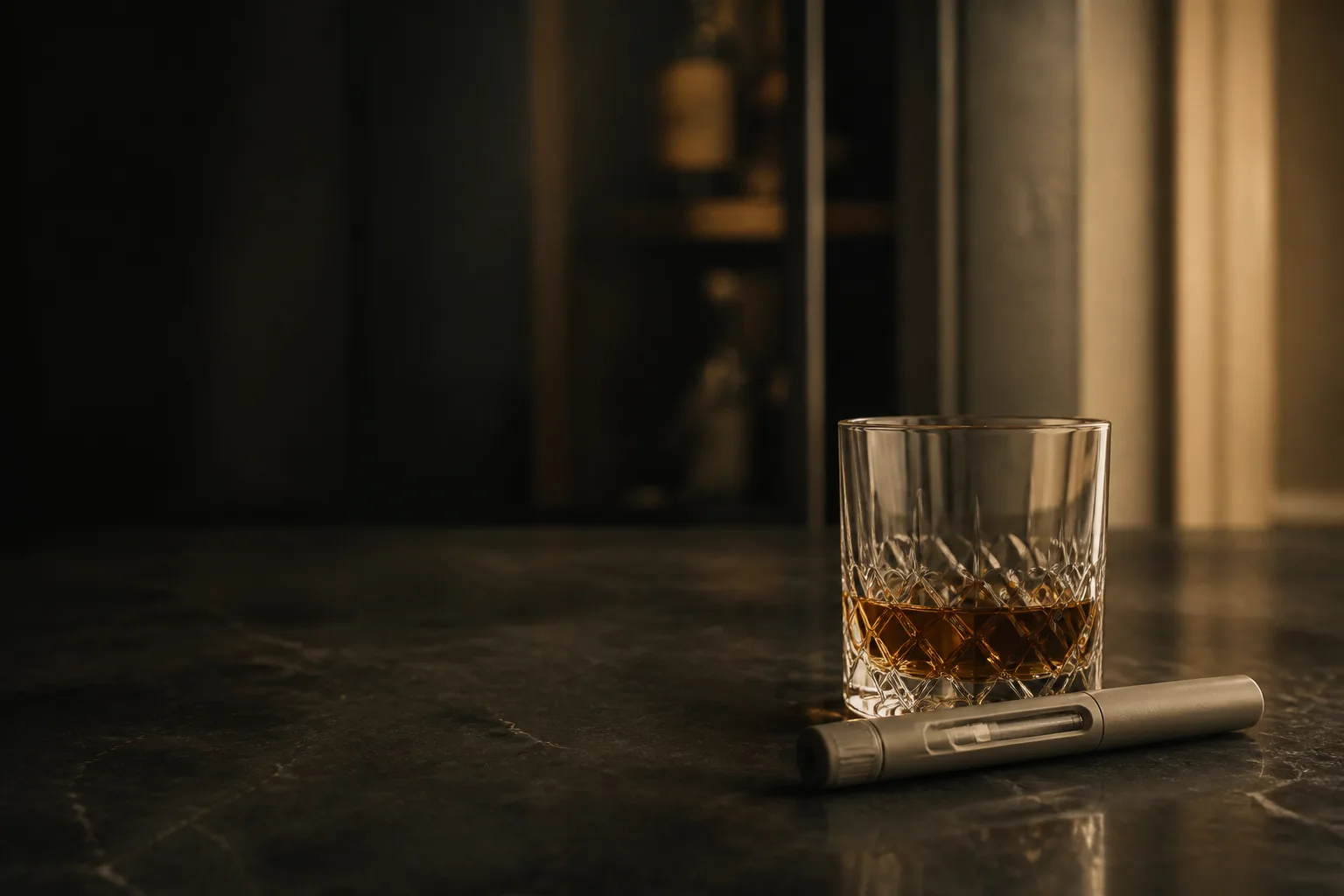
GLP-1 and Alcohol: What Happens to Your Liver, Your Cravings, and Your Morning After
GLP-1 drugs were built for blood sugar and body weight, but a second story emerged, one about alcohol. It touches three things at once: the cravings in your head, the enzymes in your liver, and the way you feel the next morning.
The first thing people notice is not on any lab report. It shows up around the third week, usually on a night that used to end with a second or third drink. The glass is still there. The appetite for it is not. That quiet is now one of the most studied side effects in modern medicine, and it touches the cravings in your head, the enzymes in your liver, and your morning after.
The first thing people notice is not on any lab report. It shows up around the third week, usually on a night that used to end with a second or third drink. The glass is still there. The appetite for it is not. People describe it the same way over and over, the desire simply went quiet, like a radio turned down in another room.
That quiet is now one of the most studied side effects in modern medicine. GLP-1 receptor agonists, the drug class that includes semaglutide and tirzepatide, were built to manage blood sugar and body weight. But somewhere between the pharmacy and the dinner table, a second story emerged, one about alcohol. It touches three things at once: the cravings in your head, the enzymes in your liver, and the way you feel the next morning. Here is what the research says, minus the hype.
14 pts
Fewer Heavy Drinking Days
vs placebo (Lancet, 2026)
36%
Lower Risk
of alcohol related events in real world data
71%
Reported Less Craving
of alcohol related posts analyzed
29M
US Adults with AUD
estimated in 2023
Part One: The Cravings Go Quiet
The craving effect is the one with the most evidence behind it, and it starts in the brain rather than the gut. GLP-1 receptors sit in the mesolimbic reward system, the same circuitry that lights up for food, nicotine, and alcohol. In animal work, semaglutide blunted alcohol's ability to raise dopamine in the nucleus accumbens, the region that files an experience under do that again. When the dopamine spike shrinks, so does the pull.
Human trials followed. In a 2025 randomized trial out of USC and UNC, low dose semaglutide reduced weekly alcohol craving, cut the average number of drinks on drinking days, and lowered heavy drinking days compared to placebo, even at the lowest clinical doses. The effect on some drinking measures looked potentially larger than what is often seen with existing approved medications for alcohol use disorder.
Then came the bigger confirmation. In April 2026, The Lancet published a 26 week trial of 108 adults with alcohol use disorder and obesity. Heavy drinking days fell by 41.1 percentage points on semaglutide versus 26.4 on placebo, a treatment difference of 13.7 points. Total consumption, AUDIT scores, and blood alcohol biomarkers all moved in the same direction.
Heavy Drinking Days: How Far They Fell (26 Weeks)
Alcohol still poured the same. The brain just stopped treating it like a reward worth chasing.
Not everything moved. In the same body of research, the number of days people drank at all did not always fall in a statistically clean way. The signal is strongest for how much people drink and how hard, less so for whether they abstain entirely. That distinction matters when you read a headline.
Part Two: What Happens in the Liver
The liver story splits into two threads, and the second one caught researchers off guard.
Thread One: The Indirect Route
GLP-1 drugs drive weight loss and improve insulin sensitivity. That combination is good news for metabolic dysfunction associated steatotic liver disease, the fatty liver condition once called NAFLD. Semaglutide reduces liver fat on MRI imaging, improves liver enzyme profiles, and in 2025 earned FDA approval for treating the more advanced inflammatory form, MASH. Importantly, semaglutide is not broken down by the liver's cytochrome P450 system, which keeps its drug interaction profile low.
Thread Two: The Direct Surprise
In September 2025, Yale researchers reported something no one had ordered. GLP-1 receptor agonists lowered levels of Cyp2e1, the liver enzyme that converts alcohol into acetaldehyde. Acetaldehyde, not alcohol itself, is a major driver of alcohol's damage to the liver and a prime suspect behind the pounding head the next day. Less Cyp2e1 activity meant less acetaldehyde in experimental models.
The finding suggests GLP-1 drugs may protect the liver in two separate ways at once: by acting on the brain to reduce how much someone drinks, and by slowing alcohol metabolism so that less toxic byproduct forms from whatever is consumed. In theory that could help even people who are still drinking.
Observational data lines up with the mechanism. A large 2025 cohort analysis using TriNetX matched roughly 4,500 patients per group and found lower rates of alcohol related hospitalization and liver complications among those on GLP-1 therapy. A separate meta analysis of real world registry data covering more than 2.7 million people found a 36 percent lower risk of alcohol related events.
Real World Alcohol Related Outcomes (Risk Ratio, Below 1.0 Favors the Drug)
Part Three: The Morning After
This is the part where the science thins out and the anecdotes take over, so read it carefully. There is no strong evidence that GLP-1 drugs make hangovers worse on their own. If anything, people tend to report gentler mornings, mostly because they drank less to begin with. But the drugs and alcohol share a mechanism that changes the shape of a night out.
GLP-1 agonists slow gastric emptying. Food and drink sit in the stomach longer before moving into the small intestine. That can change how quickly alcohol reaches the bloodstream, and many people report reaching a limit sooner, feeling satisfied after one or two drinks where they once had four. The flip side is real too: because both alcohol and these medications can cause nausea, upset stomach, and diarrhea, combining them can amplify those effects. Drink on a dose escalation week and the stomach may object loudly.
What Users Report Changed About Drinking
- Reduced craving / desire to drink
- Fewer drinks per occasion
- Lost taste for alcohol entirely
- Stronger nausea when drinking
There is also a blood sugar angle worth naming. Alcohol interferes with how the liver releases glucose, and GLP-1 drugs already lower blood sugar. For people with type 2 diabetes especially, that combination raises the risk of hypoglycemia. It is one of the few genuine safety flags in an otherwise reassuring picture.
Fewer cravings, likely a friendlier morning because you drank less, a stomach that may protest if you push it, and a small but real hypoglycemia risk to respect. The biggest change most people describe is not feeling worse the day after. It is not wanting the drink in the first place.
The Three Systems, Side by Side
What GLP-1 Appears to Do, and How Strong the Evidence Is
| System | What GLP-1 Appears to Do | Strength of Evidence |
|---|---|---|
| Cravings (brain) | Blunts alcohol's dopamine reward, lowers desire and heavy drinking | Strong: multiple RCTs plus real world data |
| Liver (metabolic) | Cuts liver fat, improves enzymes, approved for MASH | Strong: imaging and trial evidence |
| Liver (direct) | Lowers Cyp2e1, reducing toxic acetaldehyde | Emerging: preclinical, 2025 |
| Morning after | Milder mornings mainly via drinking less; shared nausea risk | Weak: mostly anecdotal |
| Blood sugar | Additive lowering, raising hypoglycemia risk | Established caution |
The through line across all of it is modesty. The randomized trials are still small and mostly single center, the populations skew toward people who also carry obesity, and the direct liver findings live in the lab for now. Larger dedicated trials are running through 2030, including studies focused specifically on people with alcohol associated liver disease. The picture is promising and unusually consistent, but it is not finished.
For now, the most reliable thing to say is the thing people keep saying themselves. Something about the drink got quieter. The rest of the science is busy catching up to that sentence.
Frequently Asked Questions
This article is for general information and is not medical advice. GLP-1 receptor agonists are not approved for the treatment of alcohol use disorder, and much of the liver and morning after research described here is early or preclinical. Do not start, stop, or combine any medication with alcohol without talking to a qualified healthcare professional. If you are concerned about your drinking, reaching out to a doctor or a support service is a good next step. Data drawn from The Lancet (2026), JAMA Psychiatry (2025), Yale School of Medicine (2025), and peer reviewed meta analyses current to early 2026.
Continue Reading
Related Articles
Semaglutide vs Tirzepatide for Men: Which GLP-1 Wins in 2026
13 min read

GLP-1 and Muscle Loss: How to Prevent It in 2026
12 min read
Can GLP-1 Actually Make You Consistent?
9 min read
Fatty Liver Disease in Men: The Silent Diagnosis Most Doctors Do Not Explain
9 min read