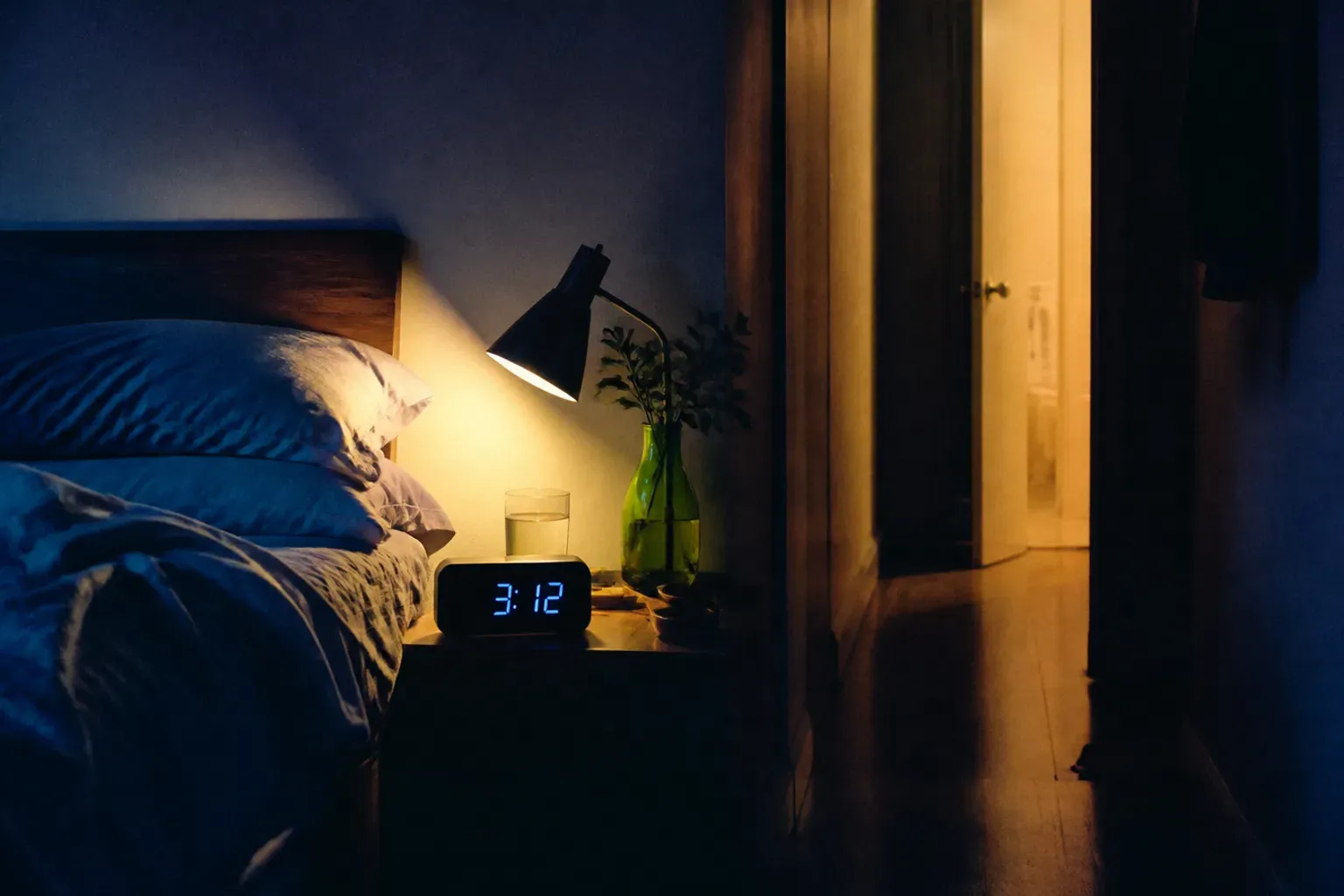
Waking Up to Pee at Night in Men Over 40: What Nocturia Means, Why It Happens and What Actually Helps
One trip to the bathroom at 3 a.m. is easy to shrug off. Two or more, night after night, is a pattern that meta-analyses tie to falls, blood pressure, diabetes and a higher risk of death, and the prostate is only one of the possible causes.
Waking up to pee at night, called nocturia, becomes common in men over 40 and is the norm past 70. Meta-analyses link it to hypertension, diabetes, falls and higher mortality. Finding the cause, which is often not the prostate, is what makes treatment work.
Waking up to pee at night is one of the most common complaints men over 40 bring to a doctor, and one of the most underreported. The medical name is nocturia: waking from sleep to urinate. A systematic review by Bosch and Weiss in the Journal of Urology in 2010 pooled 43 community studies and found that up to 60% of older people get up two or more times a night.
Most men assume the prostate is to blame. Sometimes it is. But nocturia is a symptom with many possible sources, including the heart and blood vessels, blood sugar, sleep apnea and how much urine the kidneys make overnight. This guide covers how common nocturia is at different ages, what it is linked to, where testosterone fits, and which treatments have trial data behind them.
29% to 59.3%
Men Over 70 Who Void Twice or More Nightly
Range across community studies (Bosch and Weiss, J Urol 2010)
1.27
Pooled Risk Ratio for Death
11 observational studies; evidence that nocturia itself causes death is very low (Pesonen, J Urol 2020)
1.20
Pooled Risk Ratio for Falls
9 longitudinal studies (Pesonen, J Urol 2020)
1.211
Adjusted Odds Ratio, Low T and Nocturia
6137 men in NHANES 2011 to 2016 (Kim, Neurourol Urodyn 2024)
21 RCTs
TRT Did Not Worsen Urinary Symptoms
2453 men in a 2024 network meta-analysis (Yuan, J Evid Based Med)
How Many Times Is It Normal to Wake Up to Pee at Night After 40?
Waking once a night to pee is common in men over 40 and very common past 70, while waking twice or more is where most studies start to count nocturia as a problem. In the Bosch and Weiss review, 11% to 35.2% of men aged 20 to 40 got up at least once a night, but only 2% to 16.6% got up twice or more. In men older than 70, 68.9% to 93% got up at least once, and 29% to 59.3% got up two or more times.
Upper End of Reported Nocturia Rates in Men, by Age Group (Source: Bosch and Weiss, J Urol 2010)
The ranges are wide because the 43 studies used different populations and questionnaires. The direction is consistent, though: nocturia rises steadily with age. In the large meta-analyses on health outcomes, researchers defined nocturia as two or more episodes per night in 6 of 11 studies and three or more in the other 5. One trip is usually a nuisance. Two or more trips most nights is the threshold worth raising with a doctor.
What Causes Nocturia in Men Over 40?
Nocturia in men over 40 has two broad causes: the body makes too much urine at night, or the bladder holds too little before it signals. An enlarged prostate falls in the second group. Conditions such as high blood pressure, diabetes, heart or kidney problems and obstructive sleep apnea mostly fall in the first. Many men have more than one cause at once, which is why Bosch and Weiss called the condition highly multifactorial.
Common Contributors to Nocturia in Men and What the Research Shows
| Contributor | How it drives night waking | What the evidence shows |
|---|---|---|
| High blood pressure | More urine produced overnight | Pooled odds ratio 1.28 in men across 25 studies (Rahman, J Urol 2021) |
| Diabetes | High blood sugar pulls water into urine | Pooled odds ratio 1.59 in men across 29 studies (Fu, Front Public Health 2022) |
| Obstructive sleep apnea | Easy waking and more overnight urine | CPAP reduced nocturia in a meta-analysis of 307 patients (Wang, Int Neurourol J 2015) |
| Low testosterone | Unclear; may track with poor heart and metabolic health | Adjusted odds ratio 1.211 in 6137 men; causation not shown (Kim, 2024) |
| Enlarged prostate | Bladder empties poorly and fills sooner | Part of the lower urinary tract symptom picture in older men |
| Heart failure, kidney disease, leg swelling | Fluid held by day returns to the blood when lying down | Flagged in the ICS consensus as reasons to avoid desmopressin |
The useful idea in that table is the split between urine volume and bladder capacity. A man whose kidneys produce a large share of the day's urine overnight will keep waking even after successful prostate treatment. A man whose prostate keeps the bladder from emptying will keep waking even if he stops drinking after dinner. The fix depends on which problem is driving the night trips.
Is Waking Up to Pee at Night a Sign of Something Serious?
Waking up to pee at night is linked to a higher risk of death, falls and fractures in observational studies, but nocturia itself has not been shown to cause those outcomes. Pesonen and colleagues pooled 11 observational studies in the Journal of Urology in 2020 and found a risk ratio for death of 1.27 in people with nocturia. They estimated an absolute 5-year mortality difference of 1.6% at age 60 and 4.0% at age 75.
Pooled Risk Ratios Linked to Nocturia (Source: Pesonen et al., J Urol 2020, two meta-analyses)
The same team ran a second meta-analysis of 9 longitudinal studies on falls and fractures. Nocturia was linked to a risk ratio of 1.20 for falls, with an annual risk difference of 7.5% among the elderly, and 1.32 for fractures, with an annual risk difference of 1.2%. The fracture estimate's confidence interval ran from 0.99 to 1.76, so it narrowly included no effect.
The authors rated the evidence for nocturia as a warning sign for death as moderate, and as a direct cause of death as very low. That distinction is the practical takeaway. Nocturia probably flags underlying problems, such as heart disease, poor sleep or diabetes, that carry their own risks. The night trips themselves add a separate hazard for older men: getting up half asleep in the dark is a plausible route to a fall.
Does Low Testosterone Cause Nocturia?
Low testosterone is linked to nocturia, but no study has shown that it causes it. Kim and colleagues analyzed 6137 men from the US National Health and Nutrition Examination Survey (NHANES) for 2011 to 2016, published in Neurourology and Urodynamics in 2024. Men with total testosterone below 300 ng/dL had an adjusted odds ratio of 1.211 for nocturia compared with men above that level.
Two details temper that finding. First, the relationship was U-shaped: the odds of nocturia were higher at both low and high testosterone levels, not only at the bottom. Second, the link was strongest in men over 60 and in men with hypertension, dyslipidemia and cardiovascular disease. That pattern fits the idea that low testosterone and nocturia share common roots in poor cardiometabolic health. The authors called for longitudinal studies to test whether one causes the other.
Odds of Nocturia in Men With Each Condition (Sources: Kim 2024; Rahman, J Urol 2021; Fu, Front Public Health 2022)
Our guides to blood pressure for men over 40 and insulin resistance and testosterone cover two of the conditions in that chart in more depth.
Does TRT Make Urinary Symptoms Worse?
Testosterone replacement therapy (TRT) did not worsen lower urinary tract symptoms in the trial evidence. Yuan and colleagues pooled 21 randomized controlled trials with 2453 men with late-onset hypogonadism in the Journal of Evidence-Based Medicine in 2024. They concluded that TRT does not worsen urinary symptoms regardless of whether it is given by gel, injection or pill.
In a subgroup analysis, long-term intramuscular TRT significantly lowered International Prostate Symptom Score (IPSS) results, which measure urinary symptoms including night waking. That subgroup finding is a hint, not proof that TRT treats nocturia, and the trials were not designed around nocturia specifically. Men starting TRT still need prostate checks, which our guide to PSA and prostate monitoring on TRT explains.
Can Treating Sleep Apnea Stop Nocturia?
Treating obstructive sleep apnea with continuous positive airway pressure (CPAP) reduced nocturia in the studies available. Wang and colleagues pooled 5 publications with 307 patients in the International Neurourology Journal in 2015. Patients with sleep apnea and nocturia who used CPAP had a significant drop in both the number of night trips and the volume of urine produced overnight.
The studies compared patients before and after CPAP rather than against a control group, so the size of the effect is uncertain. Still, sleep apnea is worth ruling out in any man over 40 who snores, wakes unrefreshed and gets up to urinate. Our article on sleep apnea and testosterone covers the warning signs and why the condition also suppresses testosterone.
How Is Nocturia Diagnosed?
Nocturia is diagnosed with a careful history and a bladder diary that records how much you drink and how much you pass, day and night. The 2019 International Continence Society (ICS) consensus by Everaert and colleagues reached agreement on history taking for all causes, an intake diary for fluid and food, and a bladder diary. Rectal examination, PSA, serum sodium, kidney function and hormone tests are added when judged necessary.
Illustration: The Nocturia Work-Up Described in the 2019 ICS Consensus
Step 1
History
Medications, fluid habits, snoring, heart, kidney and blood sugar history.
Step 2
Bladder and intake diary
Records drinks, food and every void, day and night.
Step 3
Targeted tests
Rectal exam, PSA, sodium, kidney function, hormones when needed.
Step 4
Match treatment to cause
Overnight urine volume, bladder capacity, sleep or a mix.
Bosch and Weiss called frequency-volume charts invaluable tools for finding the underlying cause and choosing treatment. The diary shows whether the problem is a large overnight urine volume, small frequent voids, or simple sleep disruption where the bathroom trip follows waking rather than causing it.
What Treatments Actually Reduce Night Waking?
The treatment that works best depends on the cause: managing blood pressure, blood sugar or sleep apnea where they drive extra overnight urine, prostate treatment where the bladder empties poorly, and desmopressin for some men who make too much urine at night. The ICS consensus notes that lifestyle interventions may be useful, which in practice means reviewing evening fluids, alcohol and caffeine with a doctor rather than following fixed rules.
Desmopressin is a synthetic version of the hormone that tells the kidneys to hold back water. A Cochrane review by Han and colleagues in 2017 included 14 studies with 2966 men. Over 3 to 12 months, desmopressin reduced nocturnal voids by a mean of 0.85 per night compared with placebo, based on low-quality evidence. The effect looked larger with oral, higher-dose forms and in men with documented nocturnal polyuria.
Fewer Night Voids per Night Than Placebo With Desmopressin (Sources: Weiss, J Urol 2013; Han, Cochrane 2017)
In a randomized trial by Weiss and colleagues in 385 men, published in the Journal of Urology in 2013, 50 and 75 microgram desmopressin tablets cut nocturnal voids by 0.37 and 0.41 per night more than placebo over 3 months. Desmopressin also pushed back the first night void by approximately 40 minutes compared with placebo, which means a longer first stretch of sleep. Sleep quality and quality of life improved as well.
Desmopressin Needs Sodium Monitoring
Desmopressin can lower blood sodium, which is dangerous in older men. In the Weiss trial, 2 men on the 50 microgram dose and 9 on the 75 microgram dose had sodium below 130 mmol/L. The ICS consensus calls for a sodium check on day 3 to 7 and at 1 month, and for stopping treatment if sodium falls below 130 mmol/L. It lists polydipsia, heart or kidney failure, severe leg swelling and obstructive sleep apnea as reasons a man is not a safe candidate.
Illustration: A Practical Plan if You Wake to Pee Most Nights
Step 1
- ✓Record drinks, alcohol and caffeine
- ✓Log each void, day and night, with volume if you can
Step 2
- ✓Ask about blood pressure and blood sugar
- ✓Mention snoring and daytime sleepiness
Step 3
- ✓PSA and prostate exam if advised
- ✓Kidney function, sodium and hormones when needed
Step 4
- ✓Sleep apnea, prostate, metabolic health or overnight urine volume
- ✓Recheck the diary after changes
This article is for educational purposes only and is not medical advice. It does not diagnose, treat, cure or prevent any disease. See a doctor about new or worsening urinary symptoms, and seek care promptly for blood in the urine, pain, fever or difficulty passing urine.
Sources
- Bosch JL, Weiss JP. The prevalence and causes of nocturia. Journal of Urology, 2010. https://doi.org/10.1016/j.juro.2010.04.011
- Pesonen JS et al. The Impact of Nocturia on Mortality: A Systematic Review and Meta-Analysis. Journal of Urology, 2020. https://doi.org/10.1097/JU.0000000000000463
- Pesonen JS et al. The Impact of Nocturia on Falls and Fractures: A Systematic Review and Meta-Analysis. Journal of Urology, 2020. https://doi.org/10.1097/JU.0000000000000459
- Rahman SN et al. Phenotyping the Association between Nocturia and Hypertension: A Systematic Review and Meta-Analysis. Journal of Urology, 2021. https://doi.org/10.1097/JU.0000000000001433
- Fu Z et al. The association between diabetes and nocturia: A systematic review and meta-analysis. Frontiers in Public Health, 2022. https://doi.org/10.3389/fpubh.2022.924488
- Kim SJ et al. The association between testosterone deficiency and nocturia: Insights from The National Health and Nutrition Examination Survey data set. Neurourology and Urodynamics, 2024. https://doi.org/10.1002/nau.25371
- Yuan X, Xiong X, Xue J. Effect of testosterone replacement therapy on lower urinary tract symptoms: A systematic review and network meta-analysis. Journal of Evidence-Based Medicine, 2024. https://doi.org/10.1111/jebm.12628
- Wang T et al. The Efficacy of Continuous Positive Airway Pressure Therapy on Nocturia in Patients With Obstructive Sleep Apnea: A Systematic Review and Meta-Analysis. International Neurourology Journal, 2015. https://doi.org/10.5213/inj.2015.19.3.178
- Everaert K et al. International Continence Society consensus on the diagnosis and treatment of nocturia. Neurourology and Urodynamics, 2019. https://doi.org/10.1002/nau.23939
- Han J et al. Desmopressin for treating nocturia in men. Cochrane Database of Systematic Reviews, 2017. https://doi.org/10.1002/14651858.CD012059.pub2
- Weiss JP et al. Efficacy and safety of low dose desmopressin orally disintegrating tablet in men with nocturia. Journal of Urology, 2013. https://doi.org/10.1016/j.juro.2012.12.112
Continue Reading
Related Articles

Sleep Apnea and Testosterone: The Overlooked Reason Your Levels Keep Testing Low
12 min read

Blood Pressure for Men Over 40: What Home Readings Mean, How Testosterone and TRT Move the Number, and a 12 Week Plan to Lower It
13 min read

PSA on TRT: The Prostate Number Men Misread in Both Directions
12 min read