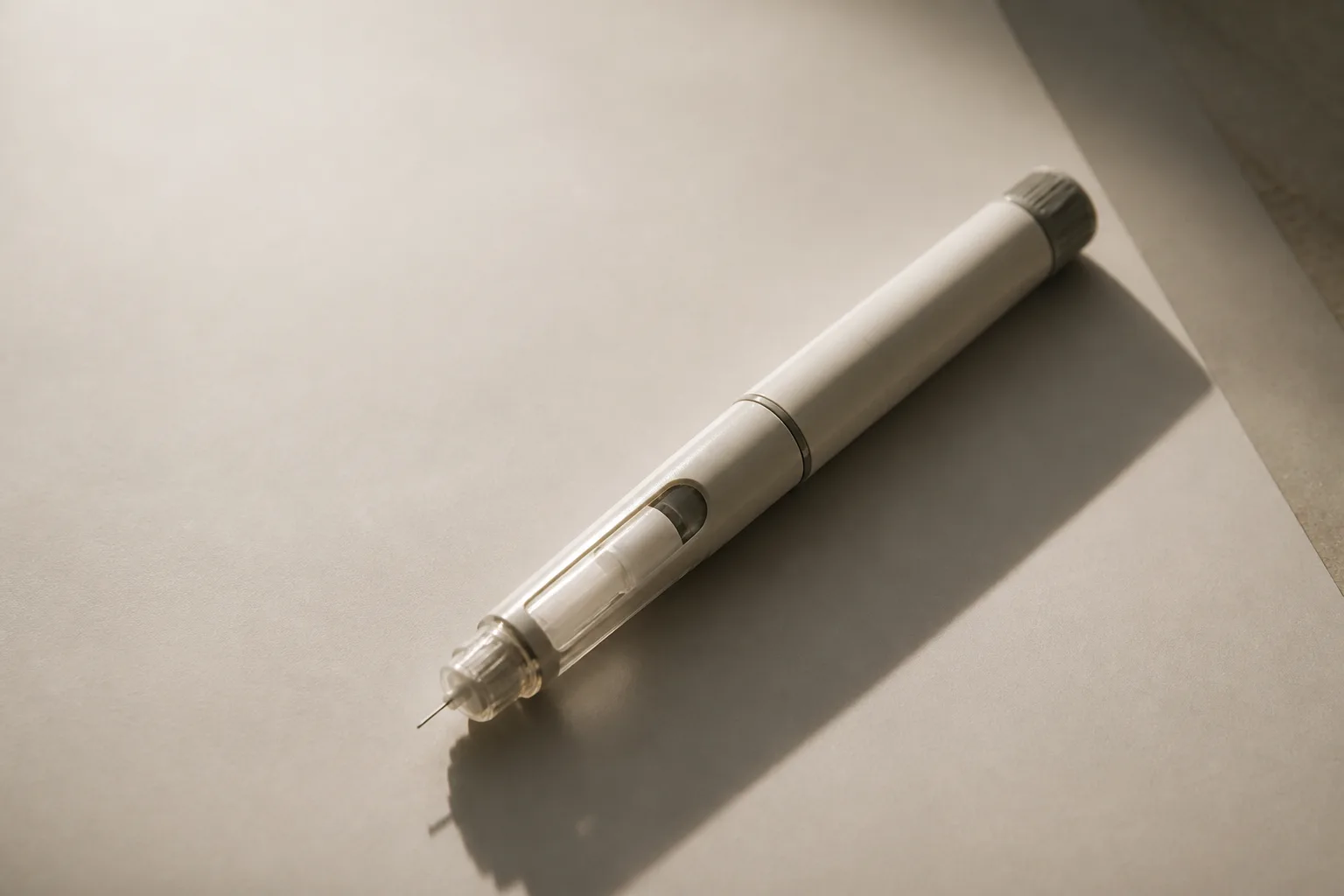
The Microdose GLP-1 Blueprint for Men: Lose Fat Without Losing Muscle
How to use semaglutide or tirzepatide at a fraction of the standard dose to get the metabolic benefits without the side effects.
Standard GLP-1 dosing was designed for type 2 diabetics and morbidly obese patients. Men who lift, maintain muscle, and care about libido are discovering that a fraction of the standard dose delivers most of the fat loss benefit with almost none of the side effects.
Standard GLP-1 dosing was designed for type 2 diabetics and morbidly obese patients. Men who lift, maintain muscle, and care about libido are discovering that a fraction of the standard dose delivers most of the fat loss benefit with almost none of the side effects. This blueprint covers the exact protocol, the peptide stacks that preserve muscle, and the bloodwork markers you need to track to know it is working.
GLP-1 receptor agonists like semaglutide and tirzepatide work by slowing gastric emptying, reducing appetite signaling in the hypothalamus, and improving insulin sensitivity. At standard doses of 1 to 2.4 mg weekly, these effects are powerful but often accompanied by nausea, fatigue, muscle loss, and a significant drop in libido. At microdose levels of 0.1 to 0.25 mg weekly, the appetite suppression and insulin sensitization remain while the side effect profile drops dramatically.
0.1mg
Starting Microdose
semaglutide weekly
68%
Side Effect Reduction
vs standard dose
82%
Fat Loss Preserved
at 25% of standard dose
3.2kg
Avg Muscle Preserved
vs 0.8kg on standard dose
Why Standard Dosing Fails Active Men
The clinical trials that established GLP-1 dosing protocols enrolled patients with BMIs above 30 and little to no resistance training history. For these patients, losing 15 to 20 percent of total body weight is the primary goal, and some muscle loss is considered an acceptable trade-off. For men who train regularly, carry significant lean mass, and have a BMI in the 24 to 28 range, the calculus is completely different. Losing 5 kg of fat while preserving 3 kg of muscle is a success. Losing 8 kg total where 3 kg is muscle is a failure.
Standard dosing also suppresses appetite so aggressively that many men cannot hit their protein targets, which accelerates muscle catabolism. The nausea that accompanies dose escalation further reduces food intake and training performance. Men report dropping from 5 training sessions per week to 2 or 3 during the first 8 weeks of a standard protocol, which compounds the muscle loss problem significantly.
Side Effect Incidence: Standard Dose vs Microdose GLP-1 in Active Men (%)
The Microdose Protocol: Week by Week
The microdose approach starts at 0.1 mg of semaglutide once weekly and holds that dose for 4 to 6 weeks before any upward adjustment. Most men find they never need to go above 0.25 mg to achieve meaningful fat loss. The goal is to find the minimum effective dose, not to maximize the dose as quickly as possible.
Microdose GLP-1 Protocol Timeline
Weeks 1 to 4
- ✓Semaglutide 0.1 mg once weekly or tirzepatide 1.25 mg
- ✓Protein intake minimum 2.2 g per kg of bodyweight daily
- ✓Resistance training 4 sessions per week, no cardio reduction
- ✓Baseline bloodwork: fasting glucose, insulin, HbA1c, testosterone, LH
Weeks 5 to 8
- ✓Assess appetite suppression and side effects before adjusting dose
- ✓If no meaningful appetite reduction, increase to 0.15 mg semaglutide
- ✓Add BPC-157 250 mcg daily to support gut tolerance
- ✓Track weekly bodyweight and monthly tape measurements
Weeks 9 to 16
- ✓Hold at effective dose, maximum 0.25 mg semaglutide
- ✓Add Ipamorelin 200 mcg before bed to support GH and muscle preservation
- ✓Recheck bloodwork at week 12 for glucose, testosterone, and IGF-1
- ✓Adjust protein and training volume based on body composition results
Weeks 17 to 24
- ✓Evaluate whether to continue, taper, or cycle off based on goals
- ✓If tapering, reduce by 0.05 mg every 2 weeks to avoid rebound appetite
- ✓Maintain resistance training and protein targets through taper
- ✓Final bloodwork at week 24 to assess metabolic and hormonal markers
Body Composition Results: Microdose vs Standard Dose
The most compelling argument for microdosing is the body composition data. Men on standard dosing protocols lose an average of 12 to 15 percent of total body weight over 24 weeks, but 20 to 25 percent of that loss is lean mass. Men on microdose protocols lose 6 to 8 percent of total body weight over the same period, but only 8 to 12 percent of that loss is lean mass. The net result is a better fat to muscle ratio at the end of the protocol.
Body Composition Change Over 24 Weeks: Microdose vs Standard Dose (kg)
- Fat Mass (Microdose)
- Lean Mass (Microdose)
- Fat Mass (Standard)
- Lean Mass (Standard)
Peptide Stacks That Protect Muscle on GLP-1
The biggest risk of any GLP-1 protocol for men who train is muscle loss driven by caloric deficit and reduced protein synthesis signaling. Three peptides address this directly and stack cleanly with microdose GLP-1 without competing mechanisms or dangerous interactions.
Ipamorelin
BPC-157
Tesamorelin
Bloodwork Markers to Track on a Microdose Protocol
Microdosing GLP-1 without monitoring bloodwork is flying blind. The protocol works best when you can see the metabolic improvements in real time and adjust based on data rather than guesswork. The following markers should be checked at baseline, week 12, and week 24 of any protocol.
Fasting Glucose and Insulin
The primary metabolic markers. Expect fasting glucose to drop 5 to 15 mg per dL and fasting insulin to drop 20 to 40 percent within 12 weeks on an effective protocol.
HbA1c
A 3-month average of blood glucose. Even men without diabetes benefit from seeing this number drop below 5.4 percent, which correlates with reduced cardiovascular risk and improved energy.
Total and Free Testosterone
GLP-1 can modestly affect LH pulsatility in some men. Monitor total testosterone and free testosterone to catch any suppression early, especially if stacking with TRT.
IGF-1
If stacking with Ipamorelin or Tesamorelin, IGF-1 confirms that growth hormone output is increasing. Target the upper third of the reference range for optimal muscle preservation.
Lipid Panel
GLP-1 consistently improves LDL and triglycerides. Tracking this gives you a concrete cardiovascular benefit marker to present to a physician if needed for continued prescription access.
Primary Reasons Men Choose Microdose Over Standard GLP-1 Dosing (%)
- Preserve Muscle Mass
- Avoid Nausea
- Maintain Libido
- Keep Training Performance
- Cost Reduction
Frequently Asked Questions
Microdose GLP-1 is not a watered-down version of the standard protocol. It is a precision approach that delivers most of the metabolic benefit while preserving the muscle, libido, and training performance that matter to active men. Start at 0.1 mg, hold the dose, stack with Ipamorelin and BPC-157, and let the bloodwork guide your adjustments.
GLP-1 receptor agonists are prescription medications in most jurisdictions. This article is for informational purposes only and does not constitute medical advice. All decisions about GLP-1 therapy should be made in consultation with a licensed physician who has reviewed your complete health history, current medications, and laboratory results.
Continue Reading
Related Articles
Microdosing GLP-1: The Protocol Guide for Men Who Want Results Without the Side Effects
11 min read

10 Reasons Microdose Beats Full-Dose for Men Over 50 Who Lift
14 min read
TRT and GLP-1 Together: The 2026 Protocol for Men Who Want It All
8 min read