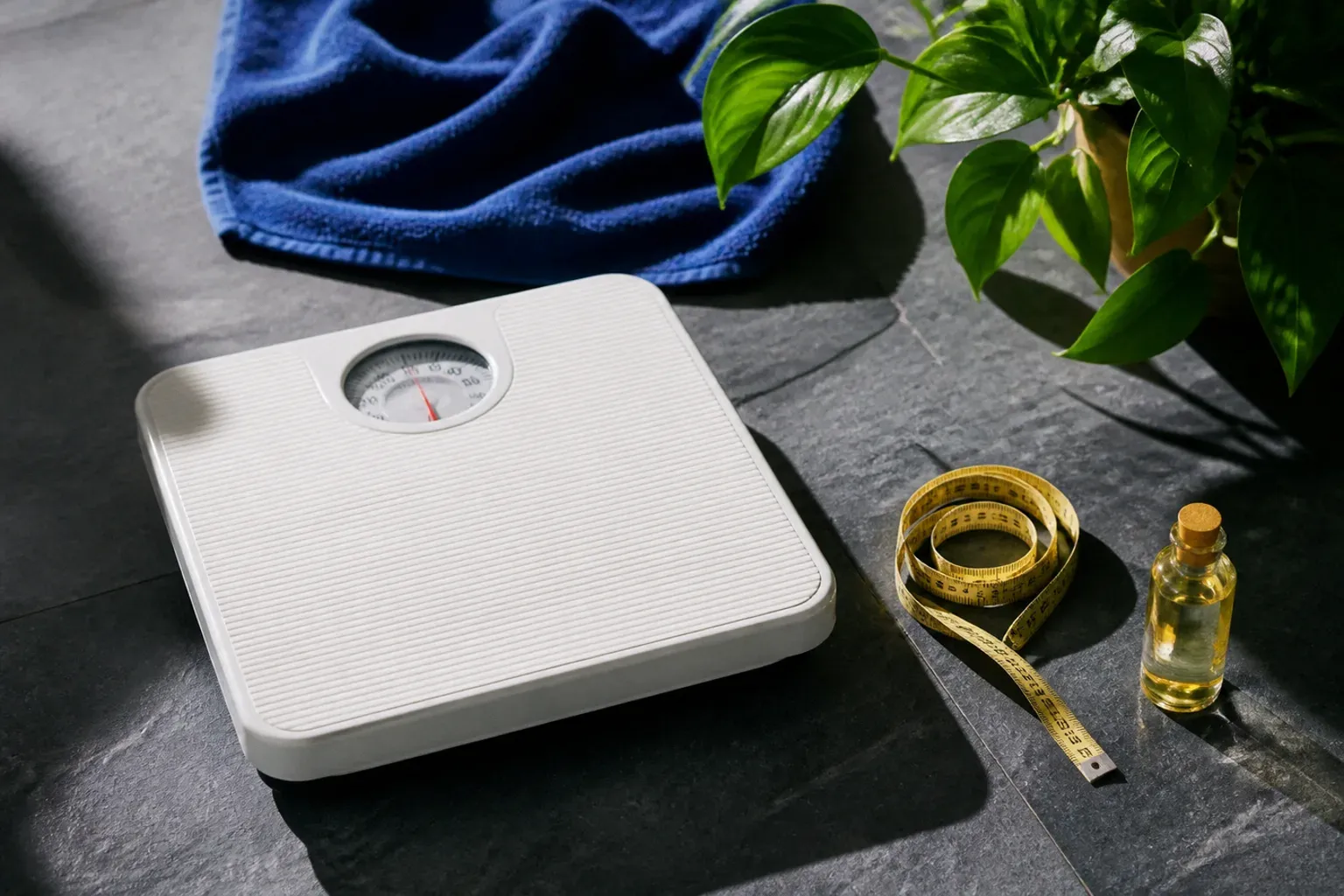
Can TRT Make You Gain Weight? What the Trials Show About Muscle, Fat, Water and the Scale
The scale can go up on testosterone therapy, and the number alone says almost nothing. The controlled trials separate muscle, fat and fluid, and they tell a more useful story than a bathroom scale can.
Can TRT make you gain weight? It can raise the number on the scale, mostly through lean mass and some retained water, while body fat usually holds steady or falls. In a 2001 dose study, fat-free mass rose by 3.4 to 7.9 kg at higher weekly doses, and changes in fat mass moved in the opposite direction to testosterone.
Can TRT make you gain weight? Yes, testosterone replacement therapy can push the bathroom scale up, but the gain is usually lean tissue and a little water rather than fat. In controlled trials, testosterone adds fat-free mass in a dose-dependent way, and changes in fat mass run in the opposite direction to testosterone levels. A man who weighs more after starting TRT may be carrying less fat than before.
That distinction matters because men often judge testosterone therapy by one number. The trials below measured body composition with DEXA scans and CT, which split weight into fat, lean tissue and bone. They come from Massachusetts General Hospital, the Charles R. Drew University dose study, the University of Melbourne diet trial, the Australian T4DM program and a 2021 meta-analysis of 16 randomized trials in men with obesity.
+3.4 to 7.9 kg
Fat-Free Mass Gained at 125 to 600 mg a Week
Bhasin et al., Am J Physiol Endocrinol Metab 2001
2 kg
Lean Mass Gained on TRT in Men With Obesity
Mangolim et al., meta-analysis of 16 RCTs, 2021
2.9 kg
Extra Fat Lost With Testosterone During a Diet
Ng Tang Fui et al., BMC Medicine 2016
Estrogen
Hormone Behind Rising Body Fat When Levels Fall
Finkelstein et al., NEJM 2013
82 weeks
After Stopping, the Body Composition Edge Was Gone
Ng Tang Fui et al., Clin Endocrinol 2017
Can TRT Make You Gain Weight, and What Kind of Weight Is It?
TRT can make you gain weight, and most of that gain is fat-free mass: muscle, the water stored inside muscle, and other lean tissue. The clearest evidence comes from a dose-response trial by Bhasin and colleagues, published in the American Journal of Physiology in 2001. Researchers suppressed natural testosterone in 61 healthy men aged 18 to 35 and then gave them weekly injections of 25, 50, 125, 300 or 600 mg of testosterone enanthate for 20 weeks, with energy and protein intake standardized.
In the Bhasin trial, fat-free mass increased by 3.4 kg at 125 mg a week, 5.2 kg at 300 mg and 7.9 kg at 600 mg. Changes in fat mass were negatively correlated with testosterone concentrations, so higher testosterone went with less fat. The 300 and 600 mg doses produced nadir levels of 1,345 and 2,370 ng/dL, far above anything a TRT prescription aims for, so those top results describe supraphysiologic dosing, not replacement.
Fat-Free Mass Gained Over 20 Weeks by Weekly Testosterone Dose (Source: Bhasin et al., Am J Physiol Endocrinol Metab, 2001)
The chart shows only the three doses where the Bhasin paper reported a rise in fat-free mass. At the 125 mg dose, mean nadir testosterone was 542 ng/dL, which sits close to the range doctors target on TRT. A man at that kind of level who also trains could reasonably see several kilograms appear on the scale over a few months while his waist stays the same or shrinks.
Does Testosterone Make You Gain Water Weight?
Testosterone can make you hold some extra water, because androgens cause the body to retain sodium and fluid. The FDA-approved label for Depo-Testosterone (testosterone cypionate), posted on DailyMed, lists retention of sodium, chloride, water, potassium, calcium and inorganic phosphates among the fluid and electrolyte effects of this drug class. For most healthy men this shows up as a small, early bump on the scale rather than visible swelling.
The same Depo-Testosterone label warns that edema, with or without congestive heart failure, may be a serious complication in patients with pre-existing cardiac, renal or hepatic disease. Swelling in the ankles or legs, sudden weight gain over a few days, or shortness of breath on TRT is a reason to call the prescribing doctor, not something to wait out. Leg swelling with pain, warmth or redness also needs prompt evaluation for a blood clot, as the label notes.
Does TRT Help With Weight Loss?
TRT helps with weight loss mainly by changing what is lost, not by melting fat on its own. In the 2016 Melbourne trial by Ng Tang Fui and colleagues (BMC Medicine), 100 obese men with testosterone at or below 12 nmol/L and a median age of 53 went on a 10-week very low energy diet followed by 46 weeks of weight maintenance. Half received testosterone undecanoate injections and half received placebo for 56 weeks.
Both groups in the Ng Tang Fui trial lost lean mass during the strict diet: 3.9 kg on testosterone and 4.8 kg on placebo. During the maintenance phase, men on testosterone regained 3.3 kg of lean mass, while men on placebo regained only 0.8 kg. By the end, the testosterone group had lost 2.9 kg more fat and kept 3.4 kg more lean mass than the placebo group. The authors concluded that weight loss on testosterone was almost exclusively due to loss of body fat.
Lean Mass Regained During Weight Maintenance, Testosterone vs Placebo (Source: Ng Tang Fui et al., BMC Medicine, 2016)
A 2021 systematic review and meta-analysis by Mangolim and colleagues in the European Journal of Endocrinology pooled 16 randomized controlled trials of TRT in men with obesity and low testosterone. With moderate certainty, TRT produced a 2-kg gain in lean body mass. The review also found TRT effective for waist circumference and BMI, but the trials disagreed widely, and the average age of participants changed how much weight men lost.
The T4DM trial adds the lifestyle side. T4DM enrolled 1007 men aged 50 to 74 with a waist of 95 cm or more and testosterone of 14.0 nmol/L or lower, all in a community lifestyle program, and gave them testosterone undecanoate 1000 mg or placebo every 3 months for 2 years. A secondary analysis by Grossmann and colleagues (JCEM, 2024) found that weight loss from the lifestyle program improved quality of life in more areas than testosterone did. Our breakdown of the T4DM diabetes results covers the glucose findings.
What About the Big Weight Loss Numbers in TRT Registries?
The largest weight loss figures linked to TRT come from observational registries, which cannot show that testosterone caused the change. Saad and colleagues reported in the International Journal of Obesity in 2016 on 411 obese hypogonadal men given testosterone undecanoate every 3 months in urology clinics, with a mean follow-up of 6 years and up to 8 years.
Average Weight Change in an Observational TRT Registry by Obesity Class (Source: Saad et al., Int J Obes, 2016; no control group)
In the Saad registry, average weight fell by 17.4 kg (16.8%) in men with class I obesity, 25.3 kg (21.5%) in class II and 30.5 kg (23.6%) in class III. Those numbers are striking, but the registry had no placebo group, the men chose to stay on treatment, and the authors disclosed payments from or employment with Bayer, which makes testosterone undecanoate. Randomized trials such as the Ng Tang Fui study and the Mangolim meta-analysis point to much smaller, body-composition-level effects.
What Each Study Found About TRT and Weight
| Study | Who Was Studied | Design | Main Weight Finding |
|---|---|---|---|
| Bhasin 2001 | 61 healthy men 18 to 35 | Randomized dose trial, 20 weeks | Fat-free mass up 3.4 to 7.9 kg at 125 to 600 mg a week |
| Finkelstein 2013 | 198 plus 202 healthy men 20 to 50 | Randomized, 16 weeks | Low estrogen drove body fat increases |
| Ng Tang Fui 2016 | 100 obese men, low testosterone | Randomized with diet, 56 weeks | 2.9 kg more fat lost, 3.4 kg more lean kept |
| Ng Tang Fui 2017 | 64 men from the 2016 trial | Follow-up after stopping | Advantage gone 82 weeks later |
| Mangolim 2021 | Men with obesity, low testosterone | Meta-analysis of 16 RCTs | 2-kg lean mass gain; waist and BMI effects varied |
| Saad 2016 | 411 obese hypogonadal men | Observational registry | Large weight loss, no control group |
Can Estrogen in Men Cause Weight Gain?
Estrogen in men affects body fat, but the trial evidence shows that too little estrogen, not too much, drove fat gain. In the 2013 New England Journal of Medicine study by Finkelstein and colleagues, 198 healthy men aged 20 to 50 had their natural testosterone and estradiol suppressed with goserelin and were then given placebo gel or 1.25 g, 2.5 g, 5 g or 10 g of testosterone gel daily for 16 weeks. Another 202 men received the same treatment plus anastrozole, which blocks conversion of testosterone to estradiol.
Body fat percentage rose in the Finkelstein groups given placebo, 1.25 g or 2.5 g of testosterone without anastrozole, where mean testosterone was 44, 191 and 337 ng/dL. The authors concluded that androgen deficiency accounted for losses in lean mass, muscle size and strength, while estrogen deficiency primarily accounted for increases in body fat. Men who take an aromatase inhibitor on TRT to push estradiol down may be working against their own body composition. Our guide to estradiol in men on TRT explains how the two hormones interact.
Weight Gain That Needs a Doctor, Not a Diet
Rapid weight gain over days, swelling in the ankles or legs, or new shortness of breath on testosterone therapy can signal fluid retention. The Depo-Testosterone label warns edema may be a serious complication in men with pre-existing heart, kidney or liver disease. Testosterone also raises red blood cell counts: in T4DM a hematocrit safety trigger above 54% occurred in six men on testosterone. Report these symptoms promptly rather than adjusting food or training.
Can Enclomiphene Cause Weight Gain?
Whether enclomiphene causes weight gain has not been established in trials, because the main studies measured hormones and sperm rather than body weight. In two phase III trials reported by Kim and colleagues in BJU International in 2016, overweight men aged 18 to 60 with secondary hypogonadism and testosterone at or below 300 ng/dL took enclomiphene or used 1.62% testosterone gel for 16 weeks. Enclomiphene raised testosterone, LH and FSH and kept sperm concentrations in the normal range, while the gel group saw a marked fall in sperm production.
The Kim abstract does not report changes in weight or fat mass, so any claim that enclomiphene makes men gain or lose weight goes beyond the published data. Enclomiphene works by blocking estrogen feedback at the brain, so it raises testosterone without removing estradiol, which fits with the Finkelstein findings on estrogen and fat but is not evidence on its own. Our enclomiphene guide covers how it compares with TRT for men who want to protect fertility.
What Happens to Your Weight If You Stop TRT?
If you stop TRT, the body composition gains tend to fade. In a follow-up of the Melbourne diet trial by Ng Tang Fui and colleagues (Clinical Endocrinology, 2017), 64 men were observed for a median of 82 weeks after treatment ended. The extra fat loss and lean mass the testosterone group had built were no longer apparent at the end of that period, and the men who had been on testosterone lost 3.7 kg more lean mass during observation than the former placebo group.
Illustration: How to Read the Scale on TRT
First
Expect a modest early rise
Water and sodium retention can nudge weight up in the first weeks.
Second
Watch the waist, not just the scale
Lean mass gains can hide fat loss, so a tape measure tells you more.
Third
Train and eat for the outcome you want
In the trials, diet and lifestyle drove most of the weight change.
Fourth
Flag fast gains or swelling
Sudden weight jumps or leg swelling are a reason to call your doctor.
How Should You Track Weight Changes on TRT?
Track waist size, strength and, where possible, a body composition scan alongside the scale, because TRT changes the mix of tissue more than the total. The Melbourne trial showed two groups losing similar amounts of weight with very different results underneath. A man gaining a kilogram while his belt notch moves in is in a different position from one gaining a kilogram around the middle. Our guide to waist-to-height ratio explains a simple home measurement.
- Weigh at the same time of day, after the bathroom and before eating, and look at weekly averages rather than single readings.
- Measure the waist at the navel every two to four weeks, since visceral fat and waist size track metabolic risk better than weight.
- Log training loads. Rising strength alongside a rising scale points to lean mass, which matches what the Bhasin dose trial found.
- Ask about a DEXA scan if body composition matters to you, since the trials above used DEXA to separate fat from lean mass.
- Keep up with your doctor's blood tests, including hematocrit and estradiol, rather than adjusting doses or adding drugs yourself.
Other medicines can also move the scale. Beta blockers, for example, are linked to modest weight gain in some men, which our comparison of atenolol vs metoprolol weight gain covers in detail. Reviewing every medication with a doctor helps separate what TRT is doing from everything else.
This article is for educational purposes only and is not medical advice. It does not diagnose, treat, cure or prevent any disease. Testosterone therapy is a prescription treatment with real risks, so speak with a licensed physician before starting, stopping or changing any hormone therapy.
Sources
- Bhasin S et al. Testosterone dose-response relationships in healthy young men. American Journal of Physiology: Endocrinology and Metabolism, 2001. https://doi.org/10.1152/ajpendo.2001.281.6.E1172
- Finkelstein JS et al. Gonadal steroids and body composition, strength, and sexual function in men. New England Journal of Medicine, 2013. https://doi.org/10.1056/NEJMoa1206168
- Ng Tang Fui M et al. Effects of testosterone treatment on body fat and lean mass in obese men on a hypocaloric diet: a randomised controlled trial. BMC Medicine, 2016. https://doi.org/10.1186/s12916-016-0700-9
- Ng Tang Fui M et al. The effects of testosterone on body composition in obese men are not sustained after cessation of testosterone treatment. Clinical Endocrinology, 2017. https://doi.org/10.1111/cen.13385
- Mangolim AS et al. Effectiveness of testosterone replacement in men with obesity: a systematic review and meta-analysis. European Journal of Endocrinology, 2021. https://doi.org/10.1530/EJE-21-0473
- Wittert G et al. Testosterone treatment to prevent or revert type 2 diabetes in men enrolled in a lifestyle programme (T4DM). Lancet Diabetes & Endocrinology, 2021. https://doi.org/10.1016/S2213-8587(20)30367-3
- Grossmann M et al. Testosterone Treatment, Weight Loss, and Health-related Quality of Life and Psychosocial Function in Men: A 2-year Randomized Controlled Trial. Journal of Clinical Endocrinology and Metabolism, 2024. https://doi.org/10.1210/clinem/dgae085
- Saad F et al. Effects of long-term treatment with testosterone on weight and waist size in 411 hypogonadal men with obesity classes I-III: observational data from two registry studies. International Journal of Obesity, 2016. https://doi.org/10.1038/ijo.2015.139
- Kim ED et al. Oral enclomiphene citrate raises testosterone and preserves sperm counts in obese hypogonadal men, unlike topical testosterone. BJU International, 2016. https://doi.org/10.1111/bju.13337
- DEPO-TESTOSTERONE (testosterone cypionate) injection prescribing information. DailyMed, National Library of Medicine. https://dailymed.nlm.nih.gov/dailymed/drugInfo.cfm?setid=cfbb53d4-b868-4a28-8436-f9112eb01c39
Continue Reading
Related Articles
Estradiol in Men: Why Crushing Your Estrogen Is the Most Common TRT Mistake
12 min read
Can Testosterone Therapy Prevent Type 2 Diabetes? What the T4DM and TRAVERSE Trials Found in Men With Prediabetes
12 min read
Atenolol vs Metoprolol Weight Gain: Which Beta Blocker Is Worse for Your Waist
9 min read